Harish Jharia

Search This Blog

Translate this article in your own language...

Showing posts with label Corporate World. Show all posts

27 January 2013

Editor’s Page: Comments Of Anonymous Visitors to Discover Life Site Are Filtered to ‘Spam Folder’ By Security Software


Dear Visitors,

Yesterday morning I was just updating my site ‘Discover Life’; doing some editing, corrections and removing digital trash as a regular exercise. I also checked the comments section in the dash board just to see whether any comments have been held back by the security software of the site. 

To my surprise I found that there were approximately 300 odd comments of anonymous visitors, out of the total 616, docked in the ‘Spam’ folder. On scrutinizing the blocked comments, I found that all those comments were genuine messages left by the visitors and not spams.

Now I have removed 'Spam' tags from all the blocked comments and started replying each comment one by one. I am working overtime for acknowledging and replying messages posted by all the 300 odd anonymous visitors to 'Discover Life' Site. 

I would like to express my regrets for not regularly checking the ‘Spam’ folder in the ‘Comments’ section, as a result of which the valuable comments of the visitors were blocked on ‘Discover Life’ Site. 

I request all my visitors to keep visiting ‘Discover Life’ site, more frequently and leave comments… as many as possible. 

I assure the visitors that their comments will not be blocked any more.

Thanks indeed.

Harish Jharia
Discover Life
27 January 2013


-----------------------------------------------------------------------------------
npad

05 December 2012

Foreign Direct Investment FDI in retail: Is FDI beneficial for India and Indian People..?


© Harish Jharia 

What is Foreign Direct Investment, FDI..? 

As far as I have understood, FDI is direct investment of money by a foreign company, in the production sector or in retail business in any host country.  This investment of capital would be either by buying a company in the proposed country or by expanding operations of any existing foreign business in that country. Foreign direct investment is made with many facilities to the investor like advantage of cheaper wages, tax exemptions offered by the host country as an incentive to gain tariff-free access to the markets. 

Foreign direct investment should not be confused with ‘portfolio investment’ which is a passive investment in the shares / securities of another country such as stocks and bonds; basically meant for earning forfeits without opening offices, factories, shopping complexes and generating employment for the local masses in the host country.

Miserable condition in India without FDI: 

India is one of the poorest countries in the world. India is one of the most corrupt countries in the world. India has few of the richest individuals in the world and at the same time India has millions of the poorest individuals in the world most of whom do not have clothes to cover their bodies, do not have shelters on their heads and who die out of  starvation. There are reports in the media that poor starving villagers in Bundelkhand and Orissa had resorted to eat grass-seed flour and roasted rodents for filling up their bellies. 

Millions of tons of precious food grains are rotting directly under the sky and rains in the open-air warehouses of Food corporation of India. There are almost no warehouses provided for the harvested grains in the agricultural villages in India. Such absence of agricultural infrastructure, results in rotting of the food grains, due to untimely rains, either in un-harvested condition in the fields or in stored state in the open fields. Millions of tons of food grains are perished just because of absence of basic infrastructure in the rural India. 

In the high altitude Himalayan stats like Jammu Kashmir , Himachal Pradesh etc thousands of tons of apple and other fruits are thrown away in the valleys in absence of fruit processing industries and proper cold storage warehouses in those areas. Similarly vegetables like tomato, onion and potato are spoiled in absence of proper storage infrastructure in different parts of India. 

The funds and resources approved by the central government if India and various state governments do not reach the rural poor citizens of India and the backward interior areas. As a result of the same it has been proved that the current government machinery functioning in India has failed to prove its worth by benefiting the farmers, producers and consumers of India. Therefore, it the high time to try foreign investment and financial management of the funds invested in this sector by dependable and honest organizations and individuals. 

How FDI is beneficial for India..?

Indian Parliament discussed about acceptance of Foreign Direct Investment FDI on 5 December 2012, followed by voting for and against its acceptance by the government of India.  In spite of the fact that the majority of the members of parliament, MPs, were against the concept of FDI, nevertheless, the result was just other way round. The proposal of FDI was accepted after voting by the MPs. 

The proposal for acceptance of FDI was accepted in the Lok Sabha, with 254 votes for FDI and 224 votes against it. The entire drama played in the lower house of Indian Parliament was more a political exercise and a number-game rather than a landmark trade & economic resolution passed in the largest democracy in the world.  

In spite of the above, let us enumerate the benefits of FDI for India in the following points:
  1. Common people of India will be benefited the most because the prices will come down to the minimal and there will be ample supply of essential commodities in the market. 
  2. With the introduction FDI the prices of essential commodities will be reduced to the minimal; because, the commissions charged by at least 3-4 stages between the producer and the retailer will be completely eliminated.
  3. Similarly, the bribery by government servants and political authorities will be checked.
  4. The farmers and producers of the products will get better and adequate price for their items sold to the merchant agency. 
  5. The poverty will be checked in the rural India because the farm laborers and skilled workers will get employment and have job security.
  6. The villagers will not die of starvation and will not commit suicide because of poverty and indebtedness. 
  7. Agricultural infrastructure like cold storage, warehouses, protected go-downs etc will be provided and loss of products would be checked and eliminated thereby the resultant yield of the country will be enhanced. 
  8. Food processing industries will be built with the help of foreign investment and the wastage of fruits and vegetables would be checked effectively. 
---------------------------------------------------------------------------------
npad

09 November 2012

Use Switch-Less 5 Amp Wall Sockets: Suitable For Cordless Telephones, Laptops, PSPs, Computers and Other Delicate Electronic Appliances…


© Harish Jharia

 I had a bad experience with electric wall sockets when I used them for operating cordless telephones. I have been using cordless phones for almost last 12 years since the days this appliance entered the Indian markets. I usually had problems with the adapters that are used for specified power supply from the house wiring to the base units of cordless phones. These adapters are meant for converting 250 Volts electric supply to the specified input voltage of 6 Volts or 9 Volts, depending on the capacity of the particular base units or the charging cradles for cordless phones.

I had mainly two problems with the wall sockets at my home. The first one was the poor longevity of the adapters that used to breakdown within months. The second problem was the interference in the wireless reception as there was audio interference while talking on the phone.

I have recently experienced that these two problems were due to the switches provided with the wall sockets at which I used to connect the base units and chargers of the cordless phones. It is known to most of us that that whenever an electric switch is operated like putting it on or off a spark is generated at the time of each operation that results into many problems like sudden voltage upsurge and interference in radio frequencies. These are the two reasons that result in breakdown of adapters and disturbance in audio output that affect the quality of voice heard on the cordless phones.

Eventually I removed switches from all the 5 Amp wall sockets and connected the base unit of my cordless phone to one of the switch-less wall sockets. Now my new cordless phone is working fine with the new configuration, giving crystal clear audio output and prolonged life to the adapter.

---------------------------------------------------------------------------------------------
Disclaimer:
This article / Story / fiction is written based on my personal observations. My intention for publishing the same is to provide healthy reading and intellectual entertainment and not for educating the visitors. Names of people, societies, communities and description of faiths, beliefs, incidents are imaginary and fictitious. They have neither any relevance to the prevailing entities and traditions nor have any similarities with ongoing lifestyles, political ideologies and legal doctrines. The contents of this creative work has not been written with any intention to criticize, condemn or oppose anything what-so-ever present in reality in any country in the world. No literature or authentic books have been referred for writing the contents of this article. The visitors are advised not to refer the contents of this article for any research or testimony on scientific, geographical, political, civic or legal purposes. The visitors are further advised to consult relevant experts before adapting any information from this article. The author or the website are not responsible for any errors, mistakes, or omissions there in.
- Harish Jharia
--------------------------------------------------------------------------------------------
npad

18 September 2012

Editors Page: Thanks Giving to the Visitors from the United States USA


New Delhi, India, 19 September 2012


Hello dear visitors from the United States,

I opened my Blog ‘Discover Life’ today at 11:11 am in India and was overwhelmed to see that there were 15 visitors online at a time. I was yet more enchanted to notice that all the 15 visitors were from the United States USA. 

Total visitors on ‘Discover Life’ in the last 11 plus hours were 136. Out of which the visitors from the USA were 108, from India 13 and others from rest of the world. 

I could not believe on my eyes when I found that there were 100 visitors from Ashburn, VA out of the total 108 US visitors from the US. It is a coincidence that Ashburn is the place where I stay for months together on my trips to the USA. 

I thank the visitors from the United States and especially those from Ashburn, VA, from the core of my heart for their interest shown in my blog ‘Discover Life’. Thanks indeed and may god bless you all. 


Unforgettable moments at Ashburn Golf Course


Please Keep Visiting ‘Discover Life’…

Thanks indeed

Harish Jharia 
Discover Life

-------------------------------------------------------------------------------
npad

30 December 2011

Indian Government Borrowing Rs 40000 Crore from the Market:

India today cartoon “India Zero Tolerance for Corruption”

Indian Government Borrowing Rs 40000 Crore from the Market: 

- Harish Jharia 

Indian government pronounced on Friday that it will borrow Rs 40,000 crore extra from the market, a move impelled by sluggish tax revenues and rising spending obligations. This is the second additional borrowing announced by the government for the current financial year as public finances have been under pressure.

For common men a simple question arises in their mind that what in fact the government is really doing with the financial management of this country. We think that it is a shameful situation for such a big country that it has to borrow loans from the business houses for its survival. 

It is even more shameful for the government who has Indian blocked black money worth Rs 79500 Lakh Crore dumped in Swiss Banks + Rs 176000 Crore eaten away by corrupt politicians in 2G scam + 8000 Crore gulped by Commonwealth Games Officials. 

We are borrowing 40 thousand Crore only… Just see the following amount of Indian money that has either been dumped in Switzerland or eaten away by corrupt Indian bigwig(s) right under the nose of the Law Makers and Law Enforcement Authorities…

The details goes as follows:

Black Money Of Indian Bigwigs  In Swiss Banks:  

$ 1500 billion
= $ 1500 lakh crore 
= Rs 79500 lakh crore 
=  Rs 79500000000000000 (quite difficult to count or write)

Money Embezzled In 2g Scam By Indian Telecom Minister A Raja And Company: 

Rs 1.76 lakh crore
= Rs 1,76,000 crore
= Rs 1760000000000 (quite difficult to count or write)

Misappropriation Of Money In Commonwealth Games By Suresh Kalmadi And Company:

Rs 8000 crore 
= Rs 80000000000 (not so easy to count or write)

Note: I might have committed mistakes while writing the figures, calculating and putting zeros. If so would someone correct those errors... Thanks...

-----------------------------------------------------------------
npad

24 September 2011

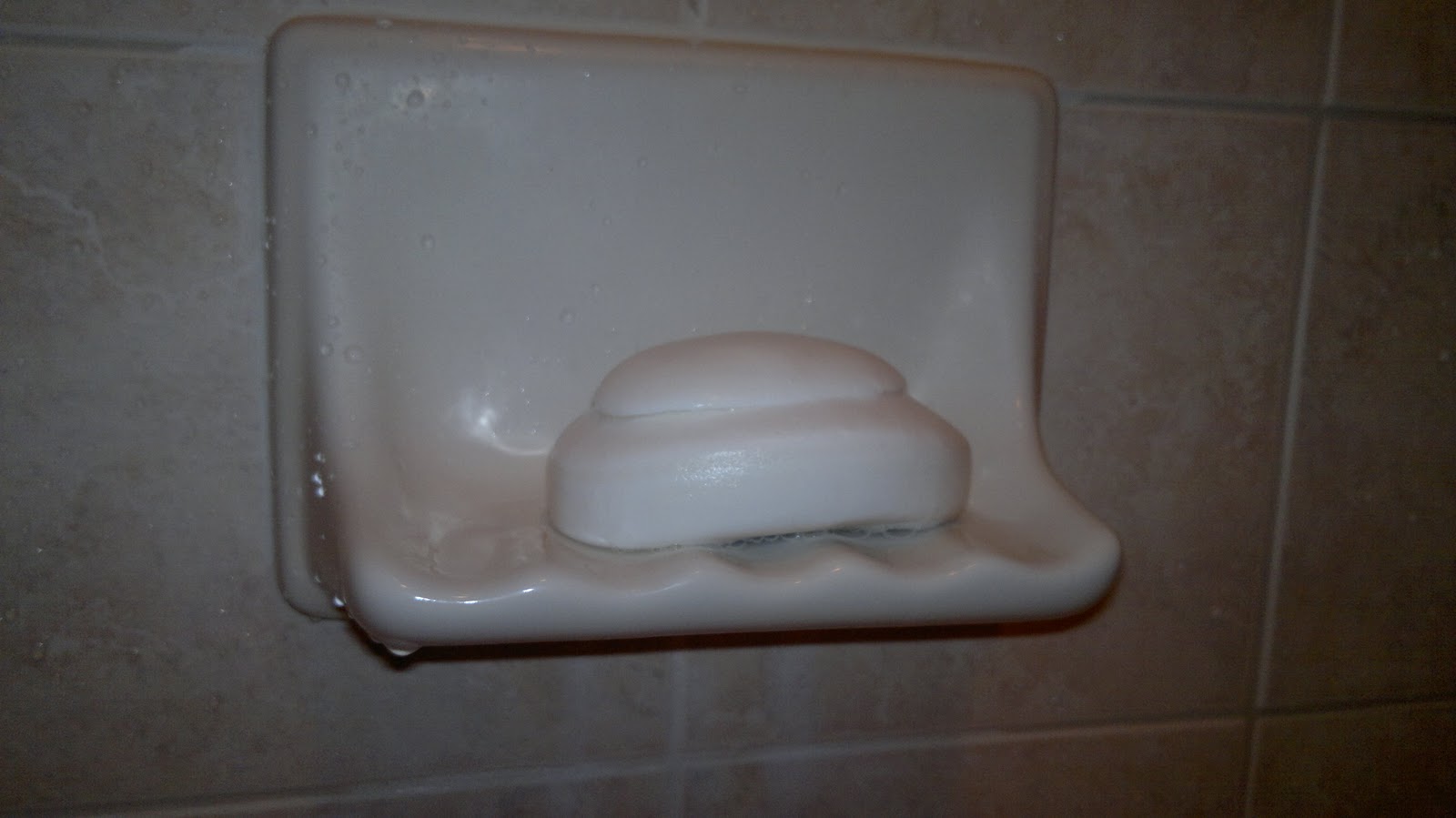
Crazy Ideas: Resource Conservation: How to Utilize the Leftovers of Bath-Soaps:

Ashburn, Virginia, USA

©Harish Jharia


With the introduction of international branded soaps in India my family also tried some of these brands at our home. We found them really useful and effective as far as skin care and cleaning is concerned. But the main hitch was the prize of these brands. 

We came across ‘Dove’ bath-soap in the year 2003 in one of the shops in Paltan Bazar at Dehradun. I was shocked to learn about its price tag of Rs 40/- as compare to the 100 gram Indian bath-soaps available on the same shop within the range of Rs 12/- to 20/-. The prize difference at the ratio of 12:40 between these soaps still continues till today.

Now let us discuss about the leftovers of the bath-soaps that are usually drained out in the commode or are used for hand-wash

Some people just throw these leftover soaps in the dustbin. Nevertheless, I just could not afford to throw the leftovers of the bath-soaps worth Rs 70/- to Rs 80/- a piece. I, instead, use to attach the leftovers of previous bath-soaps to the fresh pieces (using molecular adhesion process) and use the coupled soap cakes for bathing. 

For sticking the leftovers to a fresh soap cake you may follow this process:
  1. Use the fresh soap cake for two baths, so that the smoothness of its surface goes 
  2. Keep the leftover bath-soap under the shower while you take bath, so that it becomes soft
  3. Place the leftover on the bath-soap over the soft wet bath-soap and ring one against the other, so that any air-bubble or water forces out 
  4. Leave them stuck-together overnight and you will find that both the pieces of soaps integrated as one single piece 
Look at the following images of the process in successive stages:


            Fresh soap and leftover soap

Put wet leftover on the new wet soap and ring them

Soap attached with leftover is ready to use

-----------------------------------------
npad

23 November 2010

Winter Care Tips For Healthy, Soft and Smooth Skin:

Photobucket

©Harish Jharia


The environment becomes dry during winters and so will be the condition of our skin. People, with dry and oily skin are equally affected adversely in the dehydrated cold weather.  In winters our skin becomes dry, rough and hard as the moisture and the natural oil that the skin needs goes scarce under the chilling temperature. Our skin might even develop cracks if proper care is not taken and adequate moisture and supplements for the natural oil are not provided for keeping the skin soft, smooth and healthy. Some specific portions of our body like the lower back are more susceptible for drying fast.

Children are usually found scratching these portions of their bodies as the skin becomes dry and might even develop scaling of dead cells. Scratching of skin might also develop infection and inflammation if the skin is damaged and left unprotected and unattended.  


Keeping the above in mind we should firstly stop the activities that might take away the moisture and natural oil from our body and secondly we should provide adequate moisture and supplements to our skin for keeping it healthy, soft and smooth. The following tips may help you in keeping your skin in good shape and condition in the chilly weather during winters:
  1. Maintain the humidity of your house at a proper level by using humidifiers. You may also keep broad trays filled with water in each room. 
  2. I tried spreading wet towels in my rooms in absence of humidifiers and found that they helped in maintaining good level of humidity indoors. 
  3. Keep the major portion of your body covered as the exposed area of our skin loses moisture when it comes in contact with the dry air outdoors. 
  4. We should take bath every day, preferably tub-baths as the skin of our body will absorb moisture during the process of bathing. 
  5. We should remember that skipping bath will result in missing a vital process of moisturizing our body in addition to cleansing and conditioning it. 
  6. We should apply body lotion, olive oil, coconut oil or any other vegetable oil, immediately after the bath, all over your body, except our face, before the skin dries completely. 
  7. We need not apply soap or body wash all over our body daily in winters as we do not sweat in this weather as we do in summers. 
  8. We need to apply soap on the exposed portions susceptible for deposition of filth or those that might develop body odor
  9. We should apply moisturizer or cold cream on our face immediately after our bath and may repeat it as and when we clean or wash it. The cosmetics may be selected depending on the atmospheric temperature and relative humidity RH of the place we live. 
  10. Body lotions should be kept handy during winters for applying on our hands as and when we wash them. 
  11. We need to take comparatively more and intense care if we live in the places where there is snow-fall and the temperature goes down to subzero level. 
  12. We need to relax our dieting restrictions during winters for supplementing the losses of vital body oils and moisture. We should take balanced diet inclusive of proteins, carbohydrates, fibers, fruits, eggs, fish, butter, milk and plenty of salads in our day-to-day diet. 
------------------------------------------------------------------------------------
npad 

04 November 2010

Corruption in India: The blast furnace where taxpayers’ money is reduced to ashes


       The 38 floor Adarsh Society Building, Mumbai 

© Harish Jharia

In a recent address to the UN general assembly, US president Barack Obama mentioned about corruption prevailing in the developing countries. In spite of being the largest democracy in the world, India is also a developing country and has emerges as one of the countries having rampant corruption in every public field. 


The corruption found in the preparation for the Commonwealth games CWG Delhi 2010 can be enlisted among the most horrible antinational criminal incidents ever happened in the world. The Adarsh Society scam unearthed in Mumbai is another scandal in which names of bigwigs, as big as top Army officers, IAS officers, chief ministers and senior public servants (?) holding powerful offices were found involved. 


Revelation of such cases of corruption is the tip of an iceberg existing under wraps that is growing fast with the passage of time. The corruption cases that come to light are evidences of the fact that roots of corruption grow at the top levels of governance and the branches spread subsequently toward the lower levels of bureaucracy, making an inverted pyramid. So is the case of the money involved in corruption, where millions of rupees are bribed at the top levels and the amount of bribes is reduced with the level of authority. 


We will have to keep it in mind that these are the cases that have been caught by chance or as a result of initials taken by some Indian citizens via exercising their rights to information (RTI). These cases have not been caught or discovered by any law enforcement agencies of the government like police, CBI, or vigilance or anticorruption organization on which millions of rupees are spent by the central and state Governments on their infrastructure and salaries. The people who take bribes are the authorities holding powerful positions and the vigilance teams that are appointed for catching the cases of bribery are also the parts of the same government.  It is a bitter fact that a horse cannot stop another horse from grazing fodder. If there is a pile of fodder both the horses will share the bounty and gulp it in. 


The most vulnerable areas for corruption are the big projects costing thousands of crores of rupees. Such projects are initiated and implemented for installing big infrastructures and as long as these projects are not completed and the last bill is not paid to the contractors, there are always possibilities of giving and taking bribes. Once the work is done and the bills are paid, there in no one to care for the upkeep of that infrastructure and to find out whether the facilities have reached to the people for whom the projects were made. 


Now people have started talking about an Indian ‘bullet train’ that is going to be another billion dollar project if at all taken-up for implementation. India should not open another avenue for corruption by going for things like bullet train because there are many other problems where the national exchequer should be spent. Bullet Train is not at all required by Indians for many decades to come. It would be better for us to improve the pathetic condition of the trains currently running on Indian tracks. The poor services, the low quality of administration and the outdated handling technology are required to be improved rather than buying another white elephant in the form of ‘Bullet Train’.  


India has millions of poor and there are areas where starvation is the way of life for millions of rural Indians. There are reports of people resorting to eat grass seeds and roasted rodents for their very survival, as they cannot afford one square meal a day. 


We boast of having a few richest business families that are featured in the global list of the richest in the world. We should not keep ourselves blindfolded like ostriches ignoring the wide gap between the richest Indian and the poorest Indian that might be as wide as the difference between the United States and Zimbabwe.  It would be better for India to go for reducing the gap between the richest Indian and the poorest Indian rather than spending the scarce public money on huge projects that might attract more and more corruption. The government should concentrate on progressive projects in the rural areas and remove unemployment, poverty and starvation from Indian villages and slums


At the same time we, the people of India will have to change our mindset and learn to feel contented with whatever we can afford out of our earnings. We will have to follow the Sanskrit mantra ”Santosham param sukam” that means that contentment gives divine pleasure. 


The governments and their law enforcement agencies should be brought to red-alert and be made accountable if crimes and bribery are committed in their jurisdiction. The government organizations should not wait for the public to unearth crimes and cases of bribery out of their own efforts. Because it is the job of the law enforcement agencies to control and eradicate unlawful activities in civic life for which they are paid salaries. 
---------------------------
npad

03 March 2010

Crazy Ideas: Glaucoma patients... Beware of Yoga:

ACCESSORIES

Glaucoma patients: Beware of Yoga...

In yoga there is an aasana ‘sheershaasan’ (head stand). It is believed that doing this yoga exercise at 50+ age, might affect adversely on your eye pressure (intraocular pressure).

If the intraocular pressure shoots-up beyond permissible limits you might get Glaucoma that can lead to blindness. Because high eye-pressure will damage the optic nerve and will end up in a blind eye.

People at the age of 50 and above are advised to be careful about their eyes and get their eye-test done on regular basis.

Please browse the following sites to know more about Glaucoma:
http://www.stlukeseye.com/Conditions/Glaucoma.asp
http://www.djo.harvard.edu/site.php?url=/patients/pi/415

-Harish Jharia

--------------------------------------------------------------------------
npad

27 October 2009

Car Driving: How to Drive Safely and Perfectly on Steep Slops

Photobucket
We know, how difficult is to drive away a stationery car on an upward-slope


© Harish Jharia

When I was a small kid, I could not understand why the drivers of cars, buses and trucks used to put stones as stoppers when the vehicles failed or stopped on gradients- upward-slops and downward- slopes. I slowly understood the reasons for this when I learnt driving myself.
All of us know how difficult is to drive away a stationery car on an upward-slope. It is so because for the simple reason that a stationery car is usually put in a gear and handbrake applied and if you attempt to release the gear and hand break the automobile will uncontrollably roll-bake on the downward slop.

Now for driving away you have to press the break paddle, release the hand break, press the clutch paddle, bring it back to 1st gear, and drive away. We usually follow this procedure. But unfortunately, your automobile rolls back on the down-gradient and you might hit some other car at your back. This 5 stage exercise is so complex that almost 80% drivers fail to avoid the rollback of their cars before driving away. Here is the proper procedure for avoiding the disastrous rollback.    
Let me list it out stage wise:
Conditions: a car stopped on a steep upward-slop and is in the reverse gear and handbrakes fully applied.
Most of us usually drive away a car from such position as follows:
  1. Press brake-pedal
  2. Release hand-brake (keeping brakes applied)
  3. Press clutch-pedal (keeping brakes applied)
  4. Apply neutral gear (keeping brakes applied)
  5. Start the engine (keeping brakes applied)
  6. Apply 1st gear (keeping brakes applied)
  7. Do 3-actions simultaneously: release brake-pedal… press accelerator… release clutch-pedal…
Result: The car will first rollback a bit and then will move forward. This rolling-back of the car is an error in driving. For correcting this error, we may change our action at the 7th stage. Let us revise the above stages with corrected 7th stage.
We should drive away a car from this position in the corrected way as follows:
  1. Press brake-pedal
  2. Release hand-brake (keeping brakes applied)
  3. Press clutch-pedal (keeping brakes applied)
  4. Apply neutral gear (keeping brakes applied)
  5. Start the engine (keeping brakes applied)
  6. Apply 1st gear (keeping brakes applied)
  7. Do 2 actions together: release brake-pedal and release clutch-lever… 
  8. Take both these actions simultaneously, successively and slowly… in order to let the engine drive away the vehicle with the default throttle of the fuel and ignition setting.
  9. Continue this action until the vehicle comes in motion from the stationary position.
  10. Shift your foot from the brake to the accelerator
  11. Remove your foot from the clutch
  12. Press the accelerator and drive away as usual
Result: By following the corrected way, the cars will not rollback, before moving forward, when attempted to drive away from stationary position on an up-gradient road.
This is the way a perfect driver drives in adverse conditions.
------------------------------------------------------------------------------------------------
Disclaimer: 
This article is written based on my personal observations. My intention for publishing the same is to provide healthy reading and intellectual entertainment and not for educating the visitors. No literature or authentic books have been referred for writing the contents of this article. The visitors are advised not to refer the contents of this article for any research or testimony on scientific, geographical, political, civic or legal purposes. The visitors are further advised to consult relevant experts before adapting any information from this article. The author or the website are not responsible for any errors, mistakes, or omissions there in.
- Harish Jharia 

------------------------------------------------------------------------------------------------

18 July 2009

Are We Close To Our Roots?

Village Original

New Delhi, India, 6 December 2007

© Harish Jharia

Yes, we are holding a keyboard under our fingers, a monitor in front and roaming around the world through internet. We have progressed to the optimum beyond which we do not really desire to excel. We have all the luxuries at our command to make our life comfortable.

We do not stand in queues for fetching a couple of kilos of sugar from the ration shop. We do not run behind the bus to board for our office. We do not care to change the refill of our ball pen, rather throw it in the dust bin and buy a new one. We buy so many things from the market that we do not need and some times find one lying in a corner of our room, untouched and well packed in the shopper’s wrapper. We do so many things that we are not supposed to do.

Anyways, all such things are parts of our professional fast lives in the modern corporate world. Nevertheless, we are the same Indians, the sons and daughters of our parents, born and brought up in some villages or towns like Narsinghpur, Kareli, Gadarwara, Jabalpur, Sagar, Damoh, Khairi, Gwalior, Bhind, Moraina, Mandla, Dindori, Raipur, Bilaspur. Bhopal, Indore Ujjain, Ratlam etc.

We do remember the hardships we went through to achieve the position we hold today. That is why whenever we go to our hometown we meet our relatives and friends with warmth and respect. We do not speak Hindi in English accent. We speak our mother tongue, the dialect of our rural world.

We have not changed. We are close to our roots.

------------------------------------------------------
npad

10 July 2009

Learn English: How To Speak Better English (Practice)

Photobucket


© Harish Jharia


In the “Fourth Step to Speaking English (Practice)”, we will discuss the right ways to practice English speaking. If we repeatedly, keep speaking all types of words and sentences including those needs ‘tongue twisting’… during real English conversation, then only we would become perfect in English speaking.

Fourth Step to Speaking English (Practice)

In the “first, second and third steps to speaking English”, we discussed the importance of thinking and speaking both in English, simultaneously, while speaking this language.

We also discussed the intricacies and technical tricks for gaining perfection in English speech. Nevertheless, the real hard work is yet to be discussed. Once we have located the steep uphill way for our goal, then we are left with the most laborious job to scale the heights all by ourselves.

The more we speak and use our tongue and voice the better would be the results. English is a tongue twisting language when it comes to speak it fluently. There are many words that are not that easy to pronounce for the first time, because it needs a proper twist of our tongue to speak them in an appropriate way.

Some tongue twisting words are as follows:
  1. Vulnerable
  2. Pleasure
  3. Environment
  4. Repercussion
  5. Extraterrestrial
The main time-tested ways to practice English speaking are as follows:
  1. Interact with your siblings or friends
  2. Read newspapers or books aloud
  3. Listen to English news on TV
  4. Do not hesitate to clear doubts with anyone
Interact with your siblings or friends:

Speaking any language is the only way to be fluent in it. We need to speak as much as possible. Either right or wrong just keep speaking; there is no other way.

Now, the question is as to with whom should we speak? The answer is our nearest ones. Select someone who continues to be with us most of the time and decide to speak between ourselves, only in English. He / she might be our siblings or friends with whom we spend most of the time in our day-to-day life.

It is not essential that our partner for practicing English is expert in this language. Anyone who has a working knowledge of basic speaking in English would be quite helpful.

Read newspapers or books aloud:

Any language other than our mother tongue carries certain tongue-twisting words or combination of words with those we feel uncomfortable while pronouncing them with fluency. We usually fumble while speaking or sometimes stammer, as our tongue does not synchronize with our mind in producing the end-results.

Hence, we will have to get our tongue used to such typical pronunciations by speaking those words and combination of words repeatedly all by ourselves.

‘Vulnerable’ is one such word that gave me a real hard time, while I tried to speak it in a sentence. I could some how speak it as an individual word; nevertheless, I just fumbled while pronouncing it with a smooth flow in a sentence.

The best way to practice to overcome fumbling with tongue-twisting words or combination of words is ‘reading aloud’. In our day-to-day academic preparations, we need to read books and we read newspapers and magazines.

Just read it loudly by using your tongue and throat. By doing so, we put your tongue and throat on a job synchronizing with the commands issued by our mind. When we do it repeatedly, our tongue develops a natural instinct to produce a desired sound and eventually pronounce it without any hesitation.

Once natural instinct is developed, we achieve expertise in speaking even tongue-twisting speeches smoothly.

Listen to English news on TV :

An eight-month child learns speaking by hearing our speech and copying the same from us. Hearing impaired people cannot speak. Hence, for learning perfect English we need to hear someone speaking English.

Speaking a language other than our mother tongue is not a physical exercise and cannot be done by solitary practice. Speaking includes specific phonetic reproduction and for achieving perfection in it, we need to hear that sound so that we could learn to emulate the same sound with synchronized twist of tongue and orientation of throat vis-à-vis blowing air at a controlled throttle.

The easy and abundantly available source of perfect English speech is the news bulletins read on radio and TV. We should make it a regular habit of listening at these bulletins carefully.

It is better to listen to Indian English news rather than going for CNN or BBC or any other foreign media. I personally consider Indian English as the best for Indians to speak because, people in different countries speak English with different pronunciations and accents. If we try to learn from English spoken by British, American, Australian or Canadian people than we would end up in confusion and ambiguity and would not be able to pickup any style.

We have discussed this point in the previous resources; links to those are given at the end of this article. Please visit those resources for more information on this.

Do not hesitate to clear doubts with anyone:

We should remember that we are learners and are at the receiving end. Hence, we should not permit our ego to intercept our pursuit. We should tell our friends to feel free and point-out our mistakes. Subsequently we can find out the ways to rectify our mistakes.

-----------------------------------------------------------------------------
Read more articles on similar subject: Click on the following links
Discover Life: Speaking English- 1  
Discover Life: Speaking English- 2  
Discover Life: First Step to Speaking English (Words)  
Discover Life: Second Step to Speaking English (Sentences)  
Discover Life: Speaking English (Speech)  
Discover Life: Speaking English (Practice)
-----------------------------------------------------------------------------
npad