Harish Jharia

Search This Blog

Translate this article in your own language...

Showing posts with label Human Rights. Show all posts

10 September 2013

Why girls and young women are gang-raped in India

                  Utter failure of the system

- Harish Jharia

In the recent times there has been a steep escalation in the cases of gang rapes against girls and women in India. Such cases depend on the sexual attitude of male population towards their female counterparts in a particular society, place and region. It also depends on the careless and unsecured venturing out by girls and women at late nights and in secluded places.  

Following are the categories of sexual offenders who are suspected to commit gang rapes on girls and women: 
  1. The gang-rapists are usually found in the age group between 17 year to 35 year
  2. These sex offenders are usually unmarried men, separated married men or widowers 
  3. Most of these rapists are either illiterates or dropouts from schools 
  4. Most of these rapists are either unemployed vagabonds or unskilled / skilled laborers like drivers, cleaners, daily wage workers etc 
  5. These sex criminals usually hail from poor families living in slums 
  6. The Rapists plan and execute sexual crimes at their favorite places vulnerable for girls and women 
  7. Some of the sex criminals are suspected to be victims of child-abuse in their early lives
  8. Some of the rapists are suspected to be mentally abnormal like being short-tempered, insensitive, cruel, criminal minded etc 
                                Risky location  

Following are the vulnerable situations and conditions for gang rapes on girls and women:
  1. Girls and women who venture out all alone at late nights and to isolated places may fall prey to these molesters
  2. Girls and women connected to discothèques, and night clubs are more susceptible to  gang rapes, if they commute all alone at late nights, especially on taxies and other public transports   
  3. Gangs of sex offences also target romantic couples who find secluded places for their meetings. The goons first threaten the couple, overpower the male partner and then molest the female 
  4. Girls and women boarding empty taxis  auto rickshaws, buses or train compartments at nights are also vulnerable to sexual offences committed by vagabonds 
                        Rave Parties in India 

What the government and society should do to eliminate sexual crimes against girls and women:
  1. The local police should enforce law in such a way that girls and women become safe everywhere and every time, round the clock and no incident of molestation takes place
  2. The police and local administration should attend to the victims, file FIR, arrest the culprits and initiate criminal proceedings immediately against them 
  3. The society should develop a healthy social order that people stop treating girls and women as commodities for quenching their lust (हवस)
  4. Girls and women should also follow some code of conduct for ensuring their own safety
  5. Girls and women should not venture out to secluded places in day or night all alone or with a companion. 
  6. Girls and women should avoid visiting or working in discotheques or night clubs in nightshifts if they do not have their own mode of transport. They should also avoid attending such programs if they are not in a group of 4-5 friends
  7. Women organizations and overenthusiastic social workers should not criticize  intellectuals and senior citizens, calling them morale police,  who propose security precautions for girls and women 
  8. Cheap item numbers, filthy dialogues, rustic songs and erotic exposure of female bodies in films and television definitely pollute people’s attitude towards girls and women. Films and television programs are required to be drastically refined and made much decent
  9. Girls and women have recently started sporting western outfits like hot pants, skintight jeans and tops, thereby exposing cleavages, waistlines, legs and armpits. Indian common men are not used to watch such western avatars of Indian girls and woman 
  10. The boys and young men hailing from poor and illiterate families look at the girls and women in western outfits, as if they are item girls of films and TV commercials. That is the reason why they stare at them, stalk them and try to touch them 
  11. These vagabonds then set out for locating helpless girls or women after developing perverted sex desire and molest them on the first available opportunity
-----------------------------------------------------------------------------------------
npad

25 January 2013

Global Terrorism: David Headley (Daood Gilani) a Pakistani American Sentenced To 35 Year Imprisonment by US Court


Tahawwur Rana and David Headley (Daood Gilani)

© Harish Jharia

Jan 24, 2013

The Pakistani American and Lashkar-e-Taiba terrorist David Headley (Daood Gilani) was sentenced to 35 years in jail by a US court on Thursday. He has been sentenced for 35 year imprisonment for actively participating and guiding the 2008 Mumbai terror attacks. Headley (Daood Gilani) has been ordered to serve 35 years in jail, followed by five years of supervised release.

David Headley (Daood Gilani) escaped the well-deserved death penalty because of his deal with the US government for sharing secret information about another terrorist and his childhood friend Tahawwur Rana. The US attorneys argued that while there is no question that Headley's criminal conduct was deplorable, his decision to cooperate with the legal process had provided significant support to the US government's efforts to combat global terrorism.

David Headley’s (Daood Gilani) testimony helped to grab his associate Tahawwur Rana who was recently sentenced with 14 year imprisonment for providing material support to overseas terrorism, including the Pakistani terrorists group of 10, whose 2008 attacks in Mumbai, left 160 plus people dead and devastate properties worth millions of dollars. 

In the late 2005, Headley received orders from three leaders of Lashkar-e-Taiba to travel India and conduct extensive and prolonged surveillance in order to plan and implement the proposed terror attacks at denoted Indian spots.  David Headley (Daood Gilani) did such exploration projects for five consecutive times eventually leading to the ghastly Mumbai terror attacks in 2008, killing 166 plus people, including six Americans and wounded hundreds.

Headley has confessed, during the hearing, that he had undergone numerous surveillance missions in India for his Pakistani bosses. His criminal activities included videographing various targets in India, including the iconic Taj hotel in Mumbai. These were the spots eventually attacked by the 10 Pakistani Lashkar-e-Taiba terrorists. David Headley’s (Daood Gilani) also admitted that he had attended five different dedicated terror training camps in Pakistan, operated by Lashkar-e-Taiba, between 2002 and 2005.   

"Headley is a terrorist" the Judge pronounced while imposing the sentence on 12 different criminal counts in a packed court room. The judge also stressed on the fact that "He commits crime, cooperates and then gets rewarded for the cooperation”.
-----------------------------------------------------------------------
npad

27 December 2012

Gang Rape in Delhi, India: Indian government disrupts protest using water cannons, teargas shots and lathi charge


© Harish Jharia

Indian government has used Delhi police to disrupt the people’s movements and peaceful protest of youth activists demanding Death sentence for the culprits of the gang rape and removal of the Delhi Police Commissioner. It is claimed by some of the TV channels that before the police action some aggressive activists of rival students union intruded into the huge crowd of the peaceful agitators. These intruders along with some antisocial elements turned the peaceful agitation into crowd violence.  

The Delhi Police took advantage of this violent turn of the agitators and started using force to disrupt the agitation.  The police used lathi charge (beating the agitators with sticks), opening water cannons on the boys and girls in extremely cold weather and forcefully evacuated the young agitators out of the India gate area. 

This forceful undemocratic action was taken by the Congress lead central (federal) Government, nevertheless, the Congress Government of Delhi state openly opposed this action of Delhi Police and the Delhi Chief Minister demanded immediate removal of the Delhi Police Commissioner. The Delhi Chief Minister, of course, supported similar lathi charge on the youth activists when they tried to march towards her residence for meeting her on the previous day. 

Meanwhile, the agitators assembled at the residence of Sonia Gandhi (leader of the UPA coalition government at the center) who promised them to bring suitable legislation for amendment in the constitution and make stringent law in order to create deterrent against such heinous rape crimes.  

On the following day the Indian Prime Minister telecasted a 5 minute message to the nation appealing to all sections of the society to maintain peace and help the government in their efforts. He assured the nation for making all possible efforts to ensure security and safety to all women in this country. The PM readout a five minute address, written in a common official language and lacked the expected feelings, sympathy and compassion suiting to the highly emotional environment across the country.

By the hasty police action the Indian government has landed itself in an unprecedented critical situation when the Congress in particular is passing through its lowest profile. This undemocratic blunder resulted in confusion across various segments of the governance like political circle, Ministry of Home Affairs, Delhi Police and the concerned hospitals were the victim was admitted.

The Delhi Police:

In addition to the above one more controversy surfaced when Delhi Police booked 6-7 youth activists on the charges of murder of a police constable who died at the place of agitation out of cardiac arrest. Nevertheless, the arrested young men were released on bail on the next day. 

The police claimed that the police constable got the fatal heart attack after serious injuries on his chest, stomach and neck. The police stated that these claims were based on the postmortem reports. However, the medical superintendent of the hospital where the constable was admitted for treatment has given different observation. He stated that the constable had a severe heart attack and he did not inflicted with any serious internal or external injuries. 

The police then cremated the body of the constable on the next morning putting a final stop on the case and any possibilities of repeat postmortem for conformation of correctness of the first postmortem report, if any. 

The victim:

Meanwhile the gang rape victim was struggling for survival in the hospital and was undergoing multiple surgeries, hi-tech tests and most advanced medications. In spite of all that treatment the victim of inhuman deadly multiple rapes, cruel beatings, injuries to her vital organs and slitting allover her body by the rapists continued to hang between life and death. She continued to be admitted in the ICU throughout her stay in the Indian hospital. 

One fine morning, the Indian government shifted the rape victim from the Indian Hospital in New Delhi to the Mount Elizabeth Hospital in Singapore. It is believed that the victim’s certain vital organ was malfunctioning and a major portion of her intestine was removed in the Indian hospital; eventually,   she was shifted to Singapore for multiple organ transplant surgeries. 

This gang rape case is going to be recorded in Indian history books for the brutal sexual assault and murderous attack on the helpless victim. It will also be remembered for the peculiar behavior of the Indian Government and Delhi Police. 

---------------------------------------------------------------------------------
Read articles on similar subject: Click here...
Gang rape in New Delhi, India on 16 December 2012: India ashamed on the inhuman act of its citizens 
---------------------------------------------------------------------------------
npad

14 September 2012

The Temples of Modern India: Huge Dams on Narmada River turn into burial grounds

Sardar Sarovar Dam: The overflow of deadly waters...
Arbitrary abuse of nature...

© Harish Jharia

The first Prime Minister of India Jawaharlal Nehru set targets for fast-track overall progress in India. The ‘5 year plan’ program, picked up from the erstwhile Soviet Union USSR, was the core policy, which the Indian government followed, planned and implemented all the long term huge projects. 

These projects included the public sector undertakings like Hindustan Machine Tools HMT, Bhilai Steel Plant and Hindustan Aeronautics Ltd HAL etc and the huge dams like Hira Kud Dam, Sardar Sarovar Dam and Bhakra Nangal Dam etc, across the respective Indian rivers. Jawaharlal Nehru said that all these huge projects are the temples of modern India. They looked so because they were built for making the country self-sufficient, surging up employment opportunities, proving irrigation to the dry-land agricultural fields and reducing the occurrence of floods in the low-lying areas along the big rivers. 

Nehru’s dreams proved to be quite effective in the initial decades when the projects were under construction and under employment stages. The temples of modern India slowly turned into white elephants and the dams became burial grounds. India went into enormous amount of international debts; she borrowed from Russia and other countries. Moreover, the public sector undertakings could not achieve the target-efficiency and production output and eventually became sick Industries. Today, approximately 80% - 90% PSUs have become white elephants, and are surviving with unilateral financial aid from the Indian government treasury for salaries and maintenance of the PSUs. 


        The unheard cry of the people of India

The huge dams were basically constructed for hydropower generation, irrigation and controlling devastating floods in the catchment areas of the respective rivers. But as on today the 4000 plus huge dams of enormous size are no more the temples of modern India they, in fact, have turned into burial grounds for the people and properties of the people of  India.
  1.  We may list out the devastating effects of the 4000 odd huge dams constructed allover India:
  2. Hundreds of villages and dozens of towns have been submerged under the waters in the catchment areas of the dams.
  3. Huge areas of agricultural fields, natural forests and valleys have vanished under the waters of the large dams.    
  4. Thousands of people have been displaced from their ancestral homes leaving behind all their inherited properties.
  5. The waters have swallowed the footprints of ancient civilizations submerged along with the old settlements.
  6. The displaced people have been forcibly driven away in exchange of meager compensations inadequate for their resettlement. 
  7. Adequately developed lands suitable for human settlement have not been provided to the displaced people.
  8. The dams have not generated adequate hydropower as compared to the investment, submerging natural resources and properties for constructing them.
  9. India is still depending on the Thermal power as hydropower generation could not reach the demand. 
  10. The irrigation provided from the waters of dams could be considered quite adequate. 
  11. Nevertheless, rampant corruption is reported in providing canals to the agricultural fields. 
  12. Major portion of available irrigation water is captured by the wealthy farmers in exchange of bribes.
  13. The poor farmers are kept aside at the time of distribution of water and widespread protests by poor farmers are reported from the affected areas. 
  14. These huge dams become disastrous during rainy seasons because the dam management release huge amount of water that result into deadly floods in the low-lying areas at the banks of the rivers. 
  15. All the deadly floods reported in 2012 are the results of arbitrary release of huge amount of water from dams and not due to rains in the affected areas. 
  16. The height of the dams and the water levels in dams are highly controversial.
  17. Many dams on Narmada have stored excessive water due to the heights of the dams; resulting in higher water levels that eventually result is submerging excessive area beyond the specified catchment area. 
Following are the huge dams on Narmada River in central India: 
  1. Sardar Sarovar Dam
  2. Maheshwar Dam
  3. Maan Dam
  4. Indira Sagar Dam
  5. Bargi Dam
  6. Goi Dam
  7. Jobat Dam
Following are some of the huge dams out 400 plus dams in India:
  1. Bhakra Nangal Dam: across the Sutlej river Himachal Pradesh.
  2. Bhavanisagar Dam: across Bhavani river, Tamil Nadu.
  3. Bisalpur Dam: Bisalpur, located in Tonk District of Rajasthan.
  4. Cheruthoni Dam: in Kerala.
  5. Hirakud Dam: across the Mahanadi River Orissa.
  6. Indira Sagar Dam: built on the Narmada river in Khandwa district of Madhya Pradesh.
  7. Koyna Dam: across river koyana in Koyna Naga Maharashtra.
  8. Krishnarajasagar Dam: built across Kaveri River near Mysore in Karnataka.
  9. Maithon Dam: built on the river of Barakar, Jharkhand.
  10. Mettur Dam: across Kaveri River at Salem district in Tamil Nadu.
  11. Nagarjunasagar Dam: built across Krishna River in Andhra Pradesh.
  12. Rihand Dam: across Rihand River a tributary of Sone river, Uttar Pradesh
  13. Sardar Sarovar Dam: also known as “Narmada Dam” across Narmada River in Gujarat.
  14. Tehri Dam: on the Bhagirathi River, Uttarakhand.
  15. TungaBhadra Dam: across river Tungabhadra, Hospet town in Karnataka.
------------------------------------------------------------------------------------------
npad

26 August 2012

Low Casts in Hindus: We Indians violate human rights as long as we follow caste system...

                Click on the image to enlarge...

Imagine yourself in place of the man in a manhole in Channai (Madras), India 
Indian form of Apartheid: It is a clear case of Human Rights' violation...

© Harish Jharia

Name a profession and we have a caste for it. It is not essential for you to follow the profession that is depicted by your caste; yet, in spite of your present job you will be branded with the profession based caste, your ancestors belonged to. 


Harry Potter would have been fighting against social discrimination, had that character born in India. Because the 'Potters' do not belong to the so called upper-castes category in India. Similarly, former Russian head of state Stalin who ruled the USSR from  6 May 1941 to 5 March 1953 until his death, should be thankful to the almighty for giving him birth in Russia rather than in India; lest he would have been treated as an untouchable, because he was born to a cobbler (shoemaker). 

We should stop talking about democracy and human rights as long as the words dalits, low castes, shudras, and the names of a few castes that are used as abuses exist in our vocabulary.

The castes in India are also considered and practiced as upper-castes and lower-castes. People belonging to lower castes are treated, as untouchables in this modern era of corporate world and are not even permitted to enter the temples of their religion. On the other hand people of the upper caste even use prefixed titles before their names for declaring their caste with pride; whereas, the dalits would be looked-down if their inherited identity is disclosed.


In a recent TV show 'Satyamev Jayate' hosted by film-star Amir Khan, the dalits belonging to Christian, Muslim and Sikh religions have disclosed the inhuman treatment meted out to them. In today's India the low-caste Dalit Christians have their own Churches as the normal Churches are out of bounds for them. Dalit Muslims said on the TV show that they are treated as low cast and untouchables once they leave the gates of Mosques or Id-gahs. Even in Pakistan there is rampant discrimination between upper-cast and lower-cast Muslims. Similarly, Mazhabi Sikhs also face rampant discrimination in their society. 

Naturally, the social discrimination described in the preceding paragraph is specifically present among the people, converted from Hindu religion to Christianity, Islam and Sikhism and among those who are living in  India, Bangladesh and Pakistan or elsewhere.


Watch the video of Satyamev Jayate, Based on Untouchability and titled as 'Dignity for all': 
URL: http://www.youtube.com/watch?v=lJ3XV_6hJac&feature=player_embedded

The system of arranged marriage is one of the core foundations of the caste-system prevailing in our country (India).  The violators of arranged marriage system are either declared out-castes or are even assassinated, if any boys and girls belonging to different castes of the same religion attempt to marry. There are reports of mob violence and riots taking place in rural areas as a result of inter-caste marriages.

Dalits (low castes) are not only found in the modern days, in Hidus, even the dalits who have been converted into other religions also are branded as low-castes. The caste based social discrimination is also used by politicians as a tool for inflating their vote banks for winning elections by unfair means. 


Thousands of years back, the local village-heads discovered and implemented castes just for keeping slaves for doing all the chores for them. We will have to remove all the castes from the Hindus and let everyone live with self-respect, dignity and peace. If we do it today we will be remembered by our future generations in the time to come.


-----------------------------------------------------------------

Disclaimer:
This article / Story / fiction is written based on my personal observations. My intention for publishing the same is to provide healthy reading and intellectual entertainment and not for educating the visitors. Names of people, societies, communities and description of faiths, beliefs, and incidents are imaginary and fictitious. They have neither any relevance to the prevailing entities and traditions nor have any similarities with ongoing lifestyles, political ideologies and legal doctrines. The contents of this creative work have not been written with any intention to criticize, condemn or oppose anything what so ever present in reality in any country in the world. No literature or authentic books have been referred for writing the contents of this article. The visitors are advised not to refer the contents of this article for any research or testimony on scientific, geographical, political, civic or legal purposes. The visitors are further advised to consult relevant experts before adapting any information from this article. The author or the website are not responsible for any errors, mistakes, or omissions there in.
- Harish Jharia
------------------------------------------------------------------
npad

29 December 2011

India needs an ombudsman for tackling Corruption And Black Money In High Places: Lokpal vis-à-vis CBI

                      Anna Hazare

© Harish Jharia 

What is the meaning of Lokpal?

The concept of Lokpal has been derived from the globally known entity of ‘ombudsman’ that stands for an intermediary body who works between the people and the government for dealing with cases of corruption.  Ombudsmen are also appointed separately in different departments of any government for attending to the grievances and corruption charges reported by the people of that country. 

For example, in the USA the Ombudsman International takes complaints regarding public officials and/or public corruption by civil servants. In that regard, they contract a private investigator to investigate the complaint themselves. Should the complaint be found to be true, they will forward the complaint and fact-finding data to the Attorney General and /or other law enforcement agencies.

The history of demand for the Lokpal:

The Indian version of ombudsman is proposed to be ‘The Lokpal’, for which Anna Hazare and his civil society activists have initiated a nationwide stir and forced the reluctant Indian government to initiate process of passing the Lokpal bill in both the houses of parliament of India and make it a law. Not only the politicians in the ruling party Congress were reluctant, even most of the Members of Parliament from other parties were also reluctant for supporting this bill. 

The demand for the institution of Indian ombudsman Lokpal was raised by Indian people 40 years back. Since then different drafts of Lokpal bills were tabled in the Indian parliament for dozens of times. But, the Lokpal bill never crossed the acid tests through both the houses of Indian Parliament. The Indian politicians as Members of Parliaments (MPs) did not let it happen. 

Now the similar situation has arisen and the controversial government’s draft of Lokpal bill has been passed by the lower house Lok Sabha. Subsequently, it is the turn of the upper house of the Indian parliament Rajya Sabaha to pass the same in the process of making it a law? The people of India are keeping their fingers crossed awaiting the outcome of the verdict of the highest house of power in India. 

Lokpal vis-à-vis CBI:

The Indian government’s version of Lokpal bill has a major and serious difference from that of the one drafted by the civil society, headed by the anticorruption crusader Anna Hazare. That is the position of the Central Bureau of Investigation (CBI) vis-à-vis the Lokpal. The government wants the most powerful investigation authority CBI to be under the control and administration of the Indian government. 

On the other hand, the civil society headed by Anna Hazare wants that the CBI should be a part of the Lokpal for investigating cases of corruption and fighting the cases against the culprits in the courts of law. Apparently, the CBI is proposed to report to the Lokpal only for the cases of corruption and black money. The Lokpal itself is also proposed to deal with only financial crimes committed at all the levels of governance. 

It is better known to the Indian Members of Parliament as to why don’t they want the CBI to function under the administrative control the Lokpal. 

--------------------------------------------------------------------------------------------
npad

10 April 2011

Anticorruption Jan Lokpal Bill: Arvind Kejriwal the Proposed Member of the Joint Drafting Committee


© Harish Jharia                        

Here is a brief introduction of Arvind Kejriwal who has been nominated as a member of the joint drafting committee constituted by Government of India through a gazette notification. Arvind Kejriwal has been right there, all the time, with Anna Hazare during his fast unto death at Jantar Mantar, New Delhi and managed the proceedings in addition to assisting Anna Hazare in negotiations and interactions with the people and Government of India. He also assisted Anna Hazare, along with Kiran Bedi in conducting the historic press conference held at Press Trust of India on 9 April 2011 after the successful completion of the first step of the Lokpal Bill movement. 
  
Couple of Awards and Recognition:

  1. Ramon Magsaysay Award for Emergent Leadership in 2006, for activating India's Right to Information movement at grassroots and social activities to empower the poorest citizens to fight corruption by holding the government answerable to the people.
  2. CNN-IBN awarded him the title 'Indian of the Year' in Public Service for the year 2006.

Brief Biography:

Arvind Kejriwal was born in Hissar, Haryana in 1968. He graduated from IIT Kharagpur as a Mechanical engineer in 1989. Subsequently, he joined the Indian Revenue Service (IRS), and was posted at the Income-tax Commissioner's Office in Delhi. While working in his office, he realized that most of the corruption in civic life was prevalent in the government and that because of lack of transparency in the official process. Even being in his official position, he started crusading against the corrupt practices and brought about changes to increase transparency in the Income Tax office.

In January 2000, he took a long leave from his job and founded a Delhi based citizens’ movement ‘Parivartan‘ that worked on spreading awareness for ensuring just, transparent and accountable governance. Eventually, he resigned from his high profile job, in February 2006 and dedicated himself for his NGO 'Parivartan'. 

In association with the well known social activist Aruna Roy and few others, he campaigned for introduction of the Right to Information Act that eventually turned into a silent social movement. The Delhi Right to Information Act was passed in 2001. Subsequently, the Right to Information Act (RTI) was also passed by the Indian Parliament in 2005.

-------------------------------------------
npad

21 February 2010

Core-Centers of Social Discrimination: Indian low-castes were formed to make slaves


© Harish Jharia

Social discrimination has been one of the worst problems in India since time immemorial. It was there in Indian societies many centuries ago and has been continuing until today. The people in villages are the worst sufferers of social discrimination in the form of castism. All along hundreds of generations.


Centuries ago the village heads and the chiefs of small settlements and tribes in different places discovered casts. Today we blame the higher casts for creating untouchables and discriminating against the lower casts. Nevertheless, this looks absurd theory if you just imagine the days when people were uncivilized and lived the lives of barbarians. How the higher cast did came when there was no civilization, society and humans lived like hordes of animals. In those days there were no casts no societies, no customs and even no definite languages. Everything in the life of humans was under development for turning the wild humans into social animals.

I can imagine the days when the profession of humans was just fighting. Fighting for places to settle, fighting for ownership of female captives and fighting for captive slaves and domesticated animals. Gangs and hoards of friendly people used to capture a place with facilities of water, forest for wood and land for farming. Wars were going on everywhere around. The mighty families declared themselves the rulers those became kings later. These kings used to fight all the time killing other kings and capturing properties and captives of the defeated kings. Humans had not discovered the institution of marriage until then. Everyone except the rulers was captive and slave.

The rulers, kings, and the chiefs of gangs or the village heads turned these captives and slaves into different casts. Just imagine the days when religion was not discovered and humans were not introduced to the entity of the almighty God, how the slaves and captives might have been treated.

Wars were the catastrophes when helpless humans used to run away from one place to another. They used to migrate from one kingdom to another simply to face the worse consequences than being killed in the war. These migrants were kept under captivity away from the people of the kingdom and were subjected to rigorous investigation for ensuring their genuinely.

Once their genuineness was ensured the migrants were allotted jobs to do and were called by the names of their trade. I believe that this might be the way in which the casts were discovered in the beginning of the human civilization. These people their females and children were branded with the trade they did and the name of the trade became the caste.
Photobucket
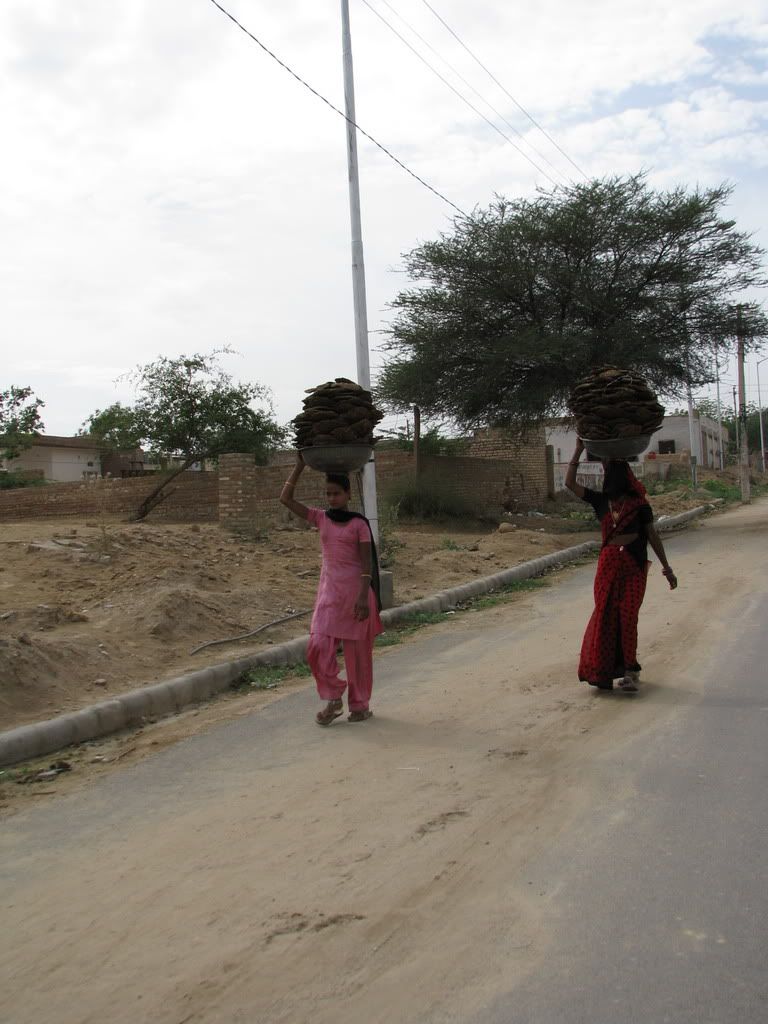
So-called Low-cast are in fact or slaves...

The scenario that I visualized in the above paragraphs is the one that might have happened thousands of years back. Yet, the scenario in the Indian villages in interiors of rural and tribal areas is no different from what all is described above. The only difference is that in earlier days the casts were newly discovered whereas in modern days the casts system is practiced in the most inhuman ways.

Today’s village heads have turned into politicians and ruling the rural masses in the guise of democratic setup. They are operating like kings of olden days. The police, army and paramilitary forces have no access to these places and if some policemen happen to be posted there, they also turn to be captives of the village heads.

I would conclude this article with an appeal to the readers and to the government organizations to go to these places and liberate the rural and tribal poor from the shackles of the village heads that are running parallel governments in the far-flung areas.

----------------------------------------------------------------------------
----------------------------------------------------------------------------
Disclaimer:
This article / Story / fiction is written based on my personal observations. My intention for publishing the same is to provide healthy reading and intellectual entertainment and not for educating the visitors. Names of people, societies, communities and description of faiths, beliefs, incidents are imaginary and fictitious. They have neither any relevance to the prevailing entities and traditions nor have any similarities with ongoing lifestyles, political ideologies and legal doctrines. The contents of this creative work has not been written with any intention to criticize, condemn or oppose anything what-so-ever present in reality in any country in the world. No literature or authentic books have been referred for writing the contents of this article. The visitors are advised not to refer the contents of this article for any research or testimony on scientific, geographical, political, civic or legal purposes. The visitors are further advised to consult relevant experts before adapting any information from this article. The author or the website are not responsible for any errors, mistakes, or omissions there in.
- Harish Jharia
----------------------------------------------------------------------------

15 January 2010

Rampant Poverty in Indian Villages and Slums


© Harish Jharia

We live in cities, move on two-wheelers or four-wheelers, beat summers and winters by electric appliances and live a life of a modern human being. We might not lead luxurious lives; yet, we get food to eat, clothes to wear and a shelters for covering our heads. We are busy in earning our bread and struggle to survive.

Nevertheless, there are more unfortunate people, in rural India, who do not get even one time food to fill their bellies. They are undernourished because of prolonged starvation. They struggle around for getting a handful of food with eyes sunk in the eye-sockets and rib-cage bones projecting out of their sun-burnt dark skins. We on the other hand discuss for hours reaching out for the best possible sunscreen lotion on internet and find solutions for sun tanning.

It is not only in rural India; the people living in the slums in metros also live lives that are even more pathetic. I remember a couple of poor children picking grains of boiled rice from an open drain in Pune. Such scenes are common where there are open drains near restaurants and the housekeeping staff dump leftover food along with the garbage. 

That is the reason that I felt offended when I read reviews about the British film ‘Slum-dog Millionaire’. I observed with pain and helplessness the inhuman neglect of the slum kids after the release of the film, its box-office success and the award giving ceremony in Oscars.  I felt it so intensely because I have seen poverty so very closely whenever I made trips to villages close to my hometown Narsinghpur in MP and dedicated visits to slums and downtowns in different metros.

I had the same feeling when I saw poor people in the US also, I happened to visit Washington DC and New York while being on a long stay in Ashburn, Virginia County. When I went to visit a nearby area for spending an evening, I saw a poor man on a road crossing, holding a placard in his hands written with a request asking for alms. On another day, I happened to see a poor man squatting on the floor of a staircase in a metro-station when I was on a trip to New York.

When I went to Maryland for shopping of some Indian stuff, I felt as-if I was in an Indian town a place dominated by middle class crowd, mainly from asia. The American glamor and luxurious style of life was just missing in Maryland. There were very few cars around; most of the people were moving around on foot.

After seeing the people living in super-luxury and on the other hand, the most unfortunate poor people living in utter-poverty and struggling to survive in a starving hell, I have concluded that the various religions and casts and creeds followed across the world, are only eyewash... There are only two religions and they are ‘The Rich’ and ‘The Poor’.

------------------------------------------------------------------------------------
Disclaimer:
This article / Story / fiction is written based on my personal observations. My intention for publishing the same is to provide healthy reading and intellectual entertainment and not for educating the visitors. Names of people, societies, communities and description of faiths, beliefs, incidents are imaginary and fictitious. They have neither any relevance to the prevailing entities and traditions nor have any similarities with ongoing lifestyles, political ideologies and legal doctrines. The contents of this creative work has not been written with any intention to criticize, condemn or oppose anything what-so-ever present in reality in any country in the world. No literature or authentic books have been referred for writing the contents of this article. The visitors are advised not to refer the contents of this article for any research or testimony on scientific, geographical, political, civic, social or legal purposes. The visitors are further advised to consult relevant experts before adapting any information from this article. The author or the website are not responsible for any errors, mistakes, or omissions there in.
- Harish Jharia
--------------------------------------------------------------------------------------
npad

19 November 2009

Teenage: The Turning Point in The Girls' Lives...

Photobucket


© Harish Jharia 


Teenage is the threshold, crossing through which, you cease to be a girl / boy… and turn into a woman / man… It is just like the process through which flowers drop their petals for turning into fruits…


This is the age when you carry the peak of your beauty, tenderness and emotions… you love and are loved the most…all the eyes turn towards you when you move around in a crowd… you bask in glory… 

you need not be an extremely good looking person your teenage gives you all that attraction that pulls attention of onlookers…


On the other hand you undergo through a rigorous hormonal upsurge… that eventually create all sorts of changes in your anatomy… physically, constitutionally and psychologically. You encounter hypersensitiveness, restlessness, indecisiveness, possessiveness, stresses, attractions, repulsions, ego, jealousy and likes…


There is nothing good or bad… all that you go through is natural… and you need not worry… if you discover any of such feeling in yourself… just keep cool… maintain a low profile… remember that you are a human being… and you are bound to face all this… 


Here comes the role of your parents and siblings from whom you seek guidelines… go to them and ask your doubts…


----------------------------------------------------------------------------------

Disclaimer:

This article is written based on my personal observations. My intention for publishing the same is to provide healthy reading and intellectual entertainment and not for educating the visitors. No literature or authentic books have been referred for writing the contents of this article. The visitors are advised not to refer the contents of this article for any research or testimony on scientific, geographical, political, civic or legal purposes. The visitors are further advised to consult relevant experts before adapting any information from this article. The author or the website are not responsible for any errors, mistakes, or omissions there in.

 - Harish Jharia 

-----------------------------------------------------------------------------------

npad